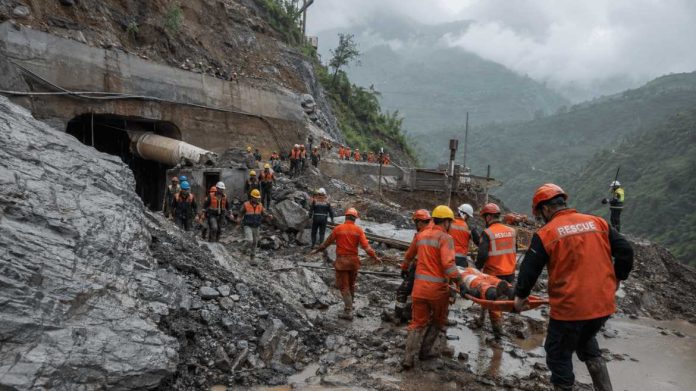
In Nepal, rescue teams are racing against time to reach over 900 hydropower workers feared trapped in tunnels beneath several power projects after devastating flash floods swept through the region last week. The disaster has claimed the lives of nearly 940 people in Nepal, with additional fatalities reported in Tibet, while thousands remain missing across the two regions. Approximately 500 missing workers are thought to be trapped in hydropower tunnels within the severely impacted Rasuwa and Nuwakot districts. As the rescue mission continues, experts caution that the decreasing oxygen levels inside these tunnels are significantly diminishing the chances of finding survivors. Workers who managed to escape the flooding recounted how many colleagues were left behind when the catastrophe unfolded.
The rescue operations have been severely hindered by the destruction of bridges, unpredictable river flooding, and challenging terrain, compelling rescue teams to rely extensively on helicopters. Neighboring countries have sent temporary bridge equipment to facilitate access restoration. The enormous amounts of debris have complicated efforts to clear blocked tunnels, necessitating blasting operations at some sites to reach trapped workers. The disaster has also disrupted a substantial portion of the nation’s power generation capacity. Rescuers described the grim conditions inside the tunnels, with mud reaching chest height and visibility being significantly limited. Despite the bleak circumstances, there is cautious optimism that certain safe zones within the tunnels may have provided opportunities for some workers to survive.
The wider disaster has had a profound impact on tens of thousands of people, obliterating entire communities and sparking renewed concerns about the potential destabilization of glacial and mountain regions due to climate change. Nepal’s leadership has called the flooding an unprecedented natural disaster, with tens of thousands of security personnel and volunteers joining the response efforts. International aid has been swift, with specialized rescue teams, financial aid packages, and technical support coming from neighboring countries, underscoring the magnitude of the crisis. Amidst the devastation, rescuers experienced a moment of hope when they successfully rescued a young child from the mud.
There are also growing concerns about data sharing on glacier and water levels between neighboring countries. Some officials fear that gaps in information sharing could impede future disaster preparedness efforts in the region. As the situation unfolds, the collaborative effort among local and international agencies continues, with hopes pinned on finding more survivors and mitigating the long-term impacts of this tragic event.