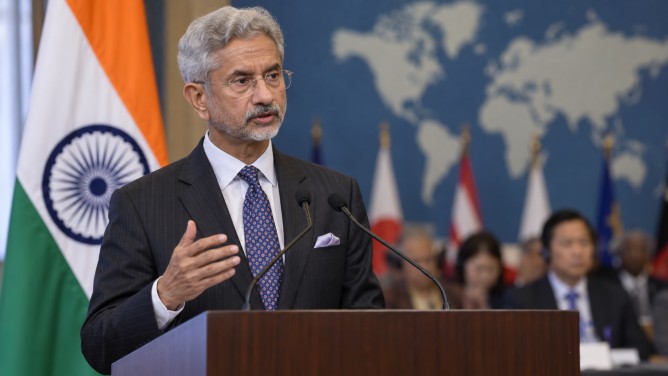
In a world of shifting geopolitical landscapes and economic uncertainties, India is positioning itself as a “power in the middle,” according to External Affairs Minister S Jaishankar. Speaking at the Bloomberg New Economy Forum alongside Canadian Foreign Affairs Minister Anita Anand, Jaishankar emphasized India’s substantial population of 1.4 billion and its robust economy, valued at approximately $4 trillion, as key factors in its growing global influence.
Jaishankar’s remarks highlight the increasing cooperation among countries with shared interests as they navigate changes in the global order. He pointed to initiatives like the Quad and the India-Middle East-Europe Economic Corridor (IMEC) as examples of strategic partnerships aimed at addressing common challenges and economic priorities. This collaboration reflects a broader trend where nations are re-evaluating their national interests and forging independent policies to enhance their role in international decision-making.
The discussion also touched on the evolving dynamics of global governance, with Jaishankar suggesting that more countries are seeking a greater voice in shaping international affairs. The emphasis on strategic independence and cooperation among middle powers comes in response to a call from Canadian Prime Minister Mark Carney for these nations to work together to uphold multilateralism in the face of global shifts.
Anita Anand echoed the importance of middle powers taking an active leadership role in the international arena. She advocated for collective efforts to protect international rules, bolster economic resilience, and tackle emerging security threats. Anand highlighted Canada’s approach, which includes trade agreements and security partnerships facilitated through multilateral platforms like the G7. Such coordinated efforts, she argued, can enhance national strategic autonomy while supporting shared interests and building more resilient supply chains.
The dialogue between Jaishankar and Anand underscores the significance of cooperation among middle powers as they address complex international challenges. By engaging more closely and identifying areas of alignment, these countries aim to strengthen their influence and resilience in an ever-changing global context.