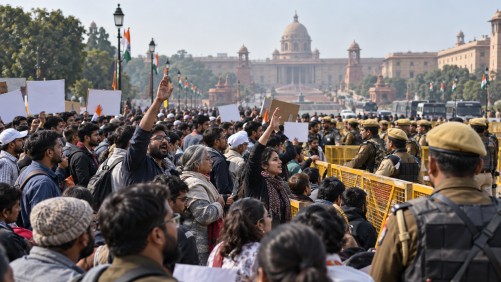
In the heart of India’s capital, Delhi, protests led by the youth-driven Cockroach Janta Party (CJP) have erupted, accusing Prime Minister Narendra Modi’s government of fostering an atmosphere of fear and stifling democratic expression. These demonstrations, which have persisted for two days, were initially sparked by demands for the resignation of Election Commissioner Gyanesh Kumar. Protesters allege that Kumar oversaw a controversial voter-list revision that potentially disenfranchised around 130 million voters, predominantly affecting minority communities, which critics argue could benefit the ruling Bharatiya Janata Party (BJP).
Amid heightened tensions, key CJP figures Abhijit Dipke, Saurav Das, and Ashutosh Ranka were detained during Saturday’s protests but were released the following day under conditions aimed at preventing further public disorder. Despite these measures, the leaders reaffirmed their commitment to continue the protests, criticizing the government’s heavy-handed response.
The demonstrations have seen extensive security measures deployed across Delhi, with police barricades, restricted public transport, and limited internet services, as authorities sought to prevent gatherings. Reports indicate that thousands were detained as police attempted to control the unrest. Notably, student activist Neha Bora was among those detained again after challenging police actions, alleging abusive treatment and overcrowded detention conditions.
As the protests continue, CJP leaders have broadened their critique to include Prime Minister Modi and Home Minister Amit Shah, accusing the government of using force to protect political interests. The BJP has dismissed allegations of electoral manipulation, with spokesperson Gaurav Bhatia defending the voter-list revision as a necessary step to remove dead and illegal voters.
Opposition leader Rahul Gandhi has added his voice to calls for accountability regarding the voter-list revision, accusing the government of electoral malpractice. His involvement has intensified pressure on the ruling party, highlighting growing concerns about electoral transparency and civil liberties in India.
The ongoing protests underscore the escalating political tensions in the country, as demonstrators remain committed to maintaining pressure on the government. Meanwhile, authorities continue to focus on preventing further unrest in the capital, reflecting the broader struggle over democratic processes and governance in India.