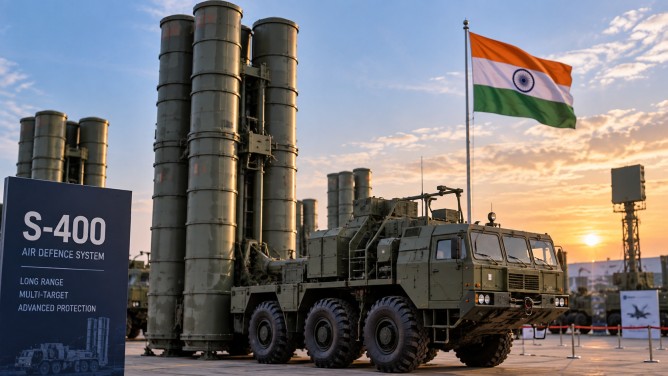
India is progressing with its plans to purchase an additional five S-400 Triumf air defence systems from Russia, as Moscow has now submitted a cost proposal to initiate negotiations with New Delhi. The decision-making process involves several steps, with the Cabinet Committee on Security expected to finalize the decision once the pricing is negotiated and clearance is obtained from the Finance Ministry. This move comes as part of India’s ongoing efforts to bolster its air defence capabilities, particularly with the existing contract for five S-400 systems, agreed upon in 2018 for $5.43 billion, set to conclude with the delivery of the last system by November 2026.
The acquisition of these additional systems is anticipated to enhance India’s defensive posture, especially in the eastern sector that borders China. The S-400 system has previously proven its effectiveness during Operation Sindoor in May 2025, which has further supported the rationale for expanding India’s fleet of these advanced air defence systems. The performance of the S-400 has been a critical factor in India’s decision to pursue further acquisitions, as it seeks to maintain a robust defence infrastructure in response to regional security dynamics.
While India is moving forward with the S-400 acquisition, the decision regarding the purchase of Russia’s Su-57 fifth-generation fighter aircraft remains pending. The Indian Air Force has shown interest in this Russian proposal, particularly in light of China’s deployment of J-20 stealth fighters in Tibet. However, a formal decision has yet to be made, reflecting ongoing evaluations and strategic considerations by Indian defence authorities.
The potential acquisition of additional S-400 systems is expected to be a key topic in broader India-Russia defence discussions. These discussions are likely to gain further momentum with the upcoming visit of Russian President Vladimir Putin to India for the BRICS summit scheduled in September. The bilateral ties between the two nations continue to be shaped by such defence collaborations, underscoring the strategic importance of their partnership in the evolving geopolitical landscape.