
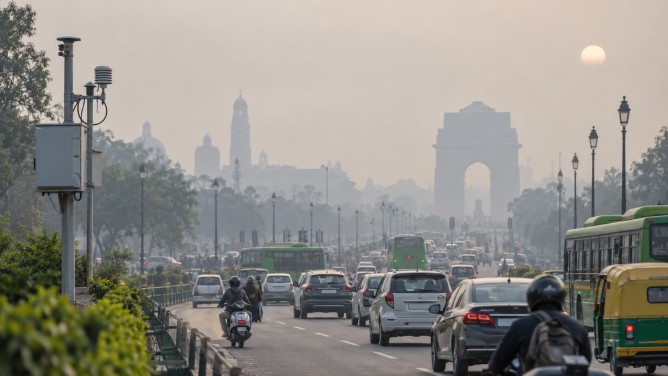
The air quality in Delhi-NCR has deteriorated to the poor category, prompting authorities to implement Stage I of the Graded Response Action Plan (GRAP). This set of measures is designed to curb pollution by targeting sources such as dust, vehicle emissions, waste burning, and industrial activities.
Delhi recorded an Air Quality Index (AQI) of 233, which falls within the poor category on the AQI scale of 201 to 300. This level of pollution can lead to breathing discomfort, especially for individuals with respiratory or other health issues. In response, authorities have been tasked with strengthening pollution-control measures and monitoring compliance to prevent further decline in air quality.
Key actions under GRAP Stage I include enforcing dust management at construction sites, prohibiting open waste burning, and encouraging the use of cleaner fuels in commercial eateries. Restrictions are also placed on the use of diesel generators, with some exemptions. Traffic management strategies aim to reduce congestion and encourage drivers to turn off engines at red lights. Additionally, visibly polluting vehicles will be monitored, and action will be taken against violations. Industrial units and power plants are required to adhere to emission standards.
Residents are advised to maintain their vehicles, avoid unnecessary idling, use public transportation if possible, and report pollution-related issues through designated government platforms. These collective efforts aim to minimize pollution at its source and improve air quality in the region.
The weather in Delhi is also a factor, with temperatures ranging from a minimum of 18°C to a forecasted maximum of around 31°C. Monitoring stations reported minimum temperatures between 17.7°C and 19.1°C. Authorities will continue to keep a close watch on pollution levels and enforce measures to prevent further deterioration in air quality.