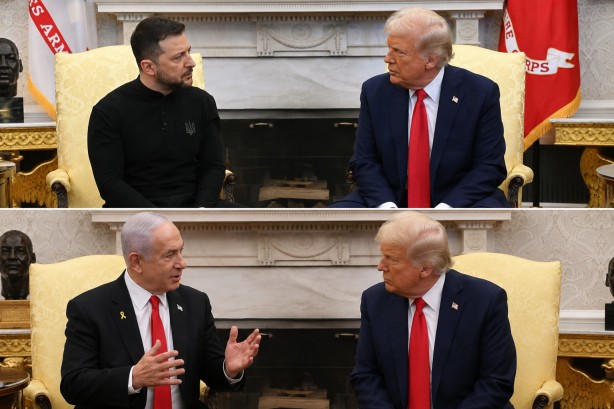
At the White House, U.S. President Donald Trump hosted two significant meetings with world leaders—Ukrainian President Volodymyr Zelenskyy and Israeli Prime Minister Benjamin Netanyahu. Both discussions were characterized by Trump as positive, although he refrained from elaborating on the specifics. Zelenskyy noted that their dialogue centered on bolstering Ukraine’s air defenses, with talks on potential domestic production of Patriot missile interceptors. Additionally, they addressed the need to reinvigorate diplomatic negotiations.
Meanwhile, Netanyahu’s visit to the Oval Office was his first since the U.S.-Israel joint military campaign against Iran earlier in the year. During their meeting, regional security was a primary focus, with discussions also touching on Iran, Lebanon, and the expansion of the Abraham Accords. These talks underscore the ongoing strategic partnership between the United States and Israel as they navigate complex regional dynamics.
These meetings come amid an evolving landscape for U.S. foreign policy concerning the ongoing conflicts in both Ukraine and the Middle East. As both Kyiv and Israel seek to ensure continued American support, Washington’s approach to these geopolitical challenges is under close scrutiny. The discussions reflect not only bilateral relations but also broader strategic interests in these volatile regions.
The context of these high-level engagements is crucial, as Ukraine remains embroiled in conflict and is keen on enhancing its defense capabilities. Simultaneously, Israel is navigating a tense regional environment with persistent threats from Iran and other neighboring entities. Both leaders are thus keen to secure assurances and support from the U.S., reinforcing their respective national security agendas.
In the backdrop of these diplomatic efforts, the U.S. administration’s policies and commitments are pivotal. As Trump and his counterparts navigate these complexities, their conversations are indicative of the broader diplomatic maneuvers aimed at stabilizing the regions and fostering collaboration in defense and security matters.