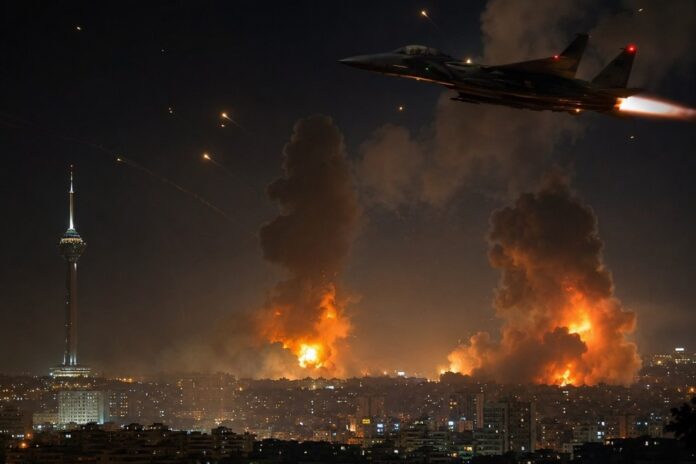
The United States has increased its military actions against Iran with a series of airstrikes, now in their third consecutive night. President Donald Trump has outlined a strategy that includes establishing a maritime blockade on Iran and imposing a 20% tariff on all cargo passing through the crucial Strait of Hormuz, which will be under the jurisdiction of US security measures. According to the US Central Command, these airstrikes aim to weaken Iran’s military capabilities and prevent any potential threats to commercial shipping and civilians in the region. Trump has stated that such military actions will continue as the US commits to maintaining security in this vital waterway.
This assertive US position follows reports of attacks on two oil tankers from the United Arab Emirates, allegedly carried out by Iranian cruise missiles in the waters of Oman. The incident resulted in the tragic death of an Indian crew member and injuries to several others. The situation has led to a significant rise in Brent crude oil prices, which have climbed nearly 8%, reflecting the heightened anxiety surrounding global energy markets.
Iran has strongly condemned the proposed maritime blockade, arguing that the United States is endangering international energy security. Tehran has warned that any attempt to restrict its maritime access will be met with a forceful response. Additionally, international maritime authorities have criticized the US plan, noting that enforcing mandatory transit fees in international waters lacks legal justification under current international law.
The escalation in military confrontations has raised concerns about the possibility of a wider regional conflict. These ongoing assaults have disrupted key shipping routes, escalated oil prices, and introduced significant uncertainty into the global economy. The strategic Strait of Hormuz remains a critical juncture for global trade, and as tensions escalate, the implications for international commerce continue to be a major concern.