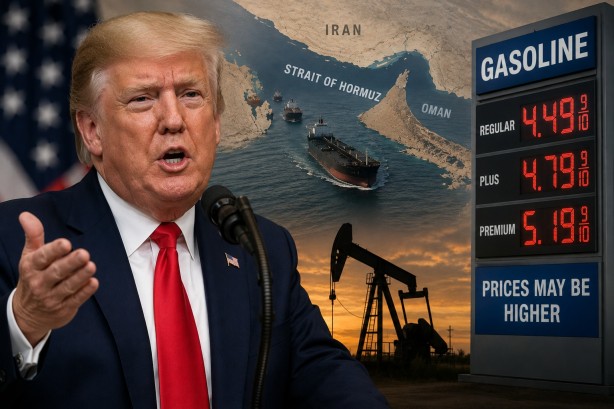
Amid escalating tensions with Iran, US President Donald Trump has called on Americans to tolerate a slight increase in gasoline prices. The ongoing conflict has disrupted shipping through the pivotal Strait of Hormuz, a crucial corridor for global oil and gas. Speaking at a rally in New York, Trump emphasized that paying “a tiny little bit more” for gasoline is a necessary sacrifice to prevent Iran from advancing its nuclear ambitions. He also hinted at potentially declaring the strategic waterway as “a territory of the United States” should the US triumph over Iran.
Iran has firmly dismissed Trump’s assertions, asserting its control over the Strait of Hormuz. Deputy Foreign Minister Kazem Gharibabadi declared that Iran would maintain its blockade until the US acknowledges what he terms as the reality of its defeat. Iranian Foreign Minister Abbas Araghchi added that as of now, Tehran has no plans to restart negotiations with Washington, stipulating that shipping will only resume once the US meets Iran’s conditions.
The impasse has significantly hampered tanker traffic through the strait, a vital artery for international oil and natural gas transport, causing crude prices to escalate and exerting upward pressure on fuel costs. In the US, the average gasoline price has climbed to approximately $4.08 per gallon—a 29% increase from the previous year. Similarly, Brent crude prices are poised for a notable weekly rise due to the uncertainty.
The economic ramifications extend to Iran, where President Masoud Pezeshkian attributes the nation’s rising inflation to the US-imposed blockade, sanctions, and constraints on Iranian oil exports. Despite these challenges, the Trump administration has threatened further financial measures against Tehran, while diplomatic efforts to broker a ceasefire remain at an impasse.