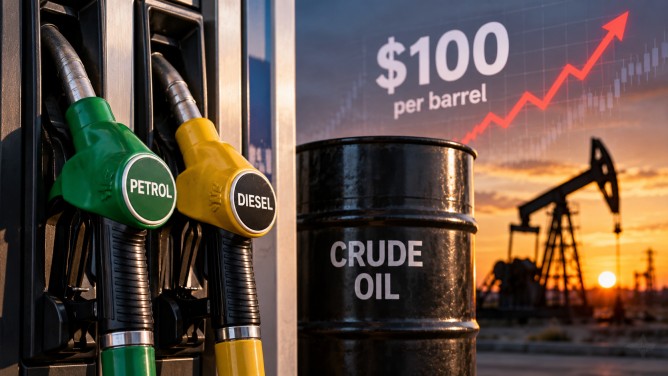
As India grapples with fluctuating oil markets, petrol and diesel prices in its major cities are feeling the strain, with crude oil import costs nearing the $100 per barrel mark. This uptrend is largely attributed to geopolitical tensions and instability in global oil markets. On Monday, Delhi’s petrol price stood at ₹102.12 per litre, while diesel was priced at ₹95.20. Meanwhile, Mumbai reported higher prices with petrol at ₹111.21 and diesel at ₹97.83. In Gurgaon, petrol was listed at ₹102.97, and diesel at ₹95.64.
Across other urban areas, similar trends were observed. Bengaluru’s petrol was priced at ₹110.82 per litre and diesel at ₹98.77. In Bhubaneswar, petrol reached ₹108.97 and diesel ₹100.68. Chandigarh, on the other hand, reported somewhat lower prices, with petrol at ₹101.54 and diesel at ₹89.47. These variations in fuel prices across different states are primarily due to differences in Value Added Tax (VAT), local levies, and transportation expenses.
The surge in international crude prices is fueled by escalating tensions in the West Asia region, particularly involving military confrontations between the United States and Iran. This has led to an increase in Brent crude prices, pushing India’s average crude import basket close to its peak in the past three months. Given that India imports over 88% of its crude oil needs, the country’s domestic fuel prices are particularly susceptible to these global price shifts.
Despite the mounting global costs, state-owned oil marketing firms have mostly kept retail petrol and diesel rates steady. These companies, which account for more than 90% of India’s petrol stations, find themselves under mounting pressure due to climbing international crude prices against a backdrop of relatively stable domestic fuel prices. Compounding this situation is a 7.9% increase in domestic petrol consumption, which rose to 3.824 million tonnes in August.