Iran placed the Gulf region on edge Wednesday by announcing that energy infrastructure across Saudi Arabia, the UAE, and Qatar would be struck “in the coming hours” in retaliation for an Israeli attack on the South Pars gasfield. The Revolutionary Guards named multiple high-profile facilities and instructed workers to leave immediately. The declaration transformed an already volatile conflict into an existential threat for global energy markets.
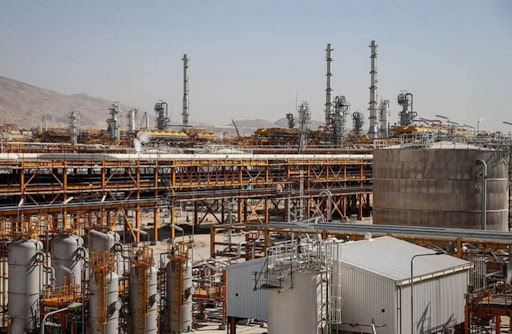
South Pars is not merely Iran’s largest gasfield — it is part of the world’s single largest natural gas deposit, shared with Qatar. The Israeli strikes on this facility, conducted with reported US approval, crossed a line that had been carefully maintained throughout the conflict. Both Washington and Tel Aviv had previously avoided targeting Iran’s energy infrastructure to prevent a catastrophic oil price spike that could destabilize the global economy.
Among the specific facilities threatened were the Samref refinery and Jubail petrochemical complex in Saudi Arabia, al-Hosn in the UAE, and the Mesaieed complex and Ras Laffan refinery in Qatar. Iran’s state broadcaster published the list alongside urgent instructions for all personnel to evacuate to safe distances. Officials in the Asaluyeh region, home to South Pars, described the US-Israeli escalation as a strategic miscalculation that would have serious consequences.
Markets responded sharply. The global oil benchmark rose 5%, reaching $108.60 a barrel, while European gas prices surged over 7.5%. These moves came against a backdrop of already severe supply disruptions: Gulf oil exports had fallen 60% from pre-war levels, partly as a result of Iran’s blockade of the Strait of Hormuz. Iran itself had continued shipping crude through the strait while choking off exports from its neighbors.
Qatar appealed for international restraint, warning through a government spokesperson that any attack on energy infrastructure threatened global energy security and the well-being of regional populations. The plea came as oil traders and energy analysts scrambled to assess potential worst-case scenarios. With evacuation orders issued and specific targets named, the situation had moved well beyond rhetoric.