
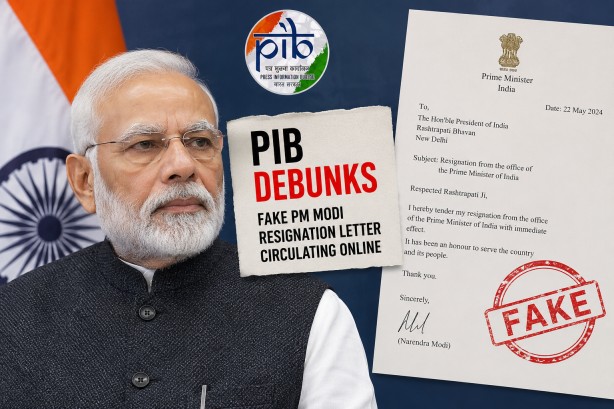
A viral post on social media falsely claimed that Indian Prime Minister Narendra Modi had resigned from his position, leading to official clarification from the government. The post, which included a fabricated letter featuring the national emblem and purported signature, was debunked by the government’s Fact Check unit, confirming it as a hoax.
The government stressed that Prime Minister Modi had not issued or signed any resignation letter. They advised the public to rely on official sources for verifying such information before spreading it online. The advisory highlights the importance of checking the authenticity of information, especially when it involves significant figures or events.
This incident is the latest in a series of misinformation cases, which have been increasingly prevalent. Recently, there have been AI-generated videos circulating on social media, falsely depicting the prime minister making statements about student protests. Such content has contributed to the spread of misleading narratives, necessitating a cautious approach by the public.
Authorities have consistently warned about the dangers of manipulated content, urging individuals to be vigilant and discerning about the information they encounter and share. The rise in deepfakes and other forms of digital misinformation poses a significant challenge, making it crucial for the public to engage critically with media content.