
As air pollution levels rise, the health risks for pets, particularly those accustomed to spending time outdoors, become a concern for many pet owners. Pollution can adversely affect the respiratory and cardiovascular health of animals like dogs and cats, prompting owners to limit their pets’ outdoor activities on days with poor air quality. However, keeping pets indoors doesn’t have to mean sacrificing their daily exercise and entertainment.
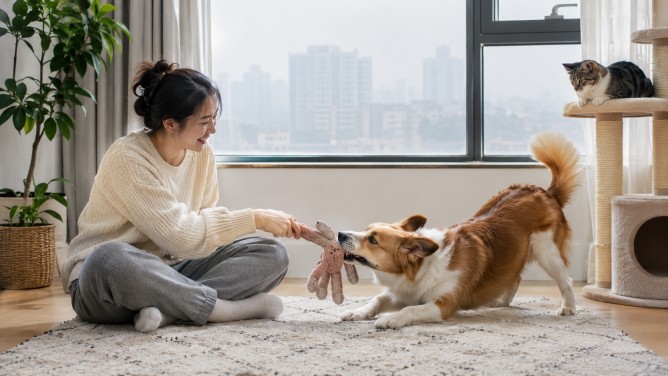
To ensure pets remain active within the confines of their homes, owners can transform small spaces into engaging play areas. Hallways can serve as venues for indoor fetch games, while cushions and chairs can be rearranged to create simple obstacle courses. Activities like gentle tug-of-war can also keep dogs entertained under supervision. For cats, providing opportunities to climb and explore through cat trees, secure window perches, and feather toys can help maintain their activity levels indoors.
Mental stimulation is equally crucial for pets’ well-being. Interactive games can prevent boredom and deter unwanted behaviors such as excessive chewing or scratching. Pet owners might consider hiding small treats around a room to encourage exploration or using puzzle feeders and treat-dispensing toys to make mealtimes more engaging. Teaching simple tricks, such as shaking hands or spinning, can also provide additional mental challenges.
Quality time spent with pets during indoor play sessions strengthens the bond between animals and their owners. Engaging in their favorite games, offering praise, and simply interacting with them can make even short playtimes enjoyable. This regular attention can help alleviate feelings of boredom, loneliness, and restlessness when outdoor activities are not an option.
While indoor activities are generally safe, pet owners should take basic precautions to prevent injuries. Avoiding intense exercise immediately after meals, using non-slip mats, and supervising homemade toy play are recommended measures. Special consideration should be given to puppies, older pets, and flat-faced breeds, which may require gentler activities.
It’s essential for pet owners to recognize when behavioral changes might indicate more than just boredom. Persistent excessive barking, destructive chewing, unusual grooming habits, or sudden weight changes can signal underlying problems requiring veterinary attention. With thoughtful indoor activities and attentive care, pet owners can keep their furry companions healthy and content even when outdoor conditions are unfavorable due to pollution.